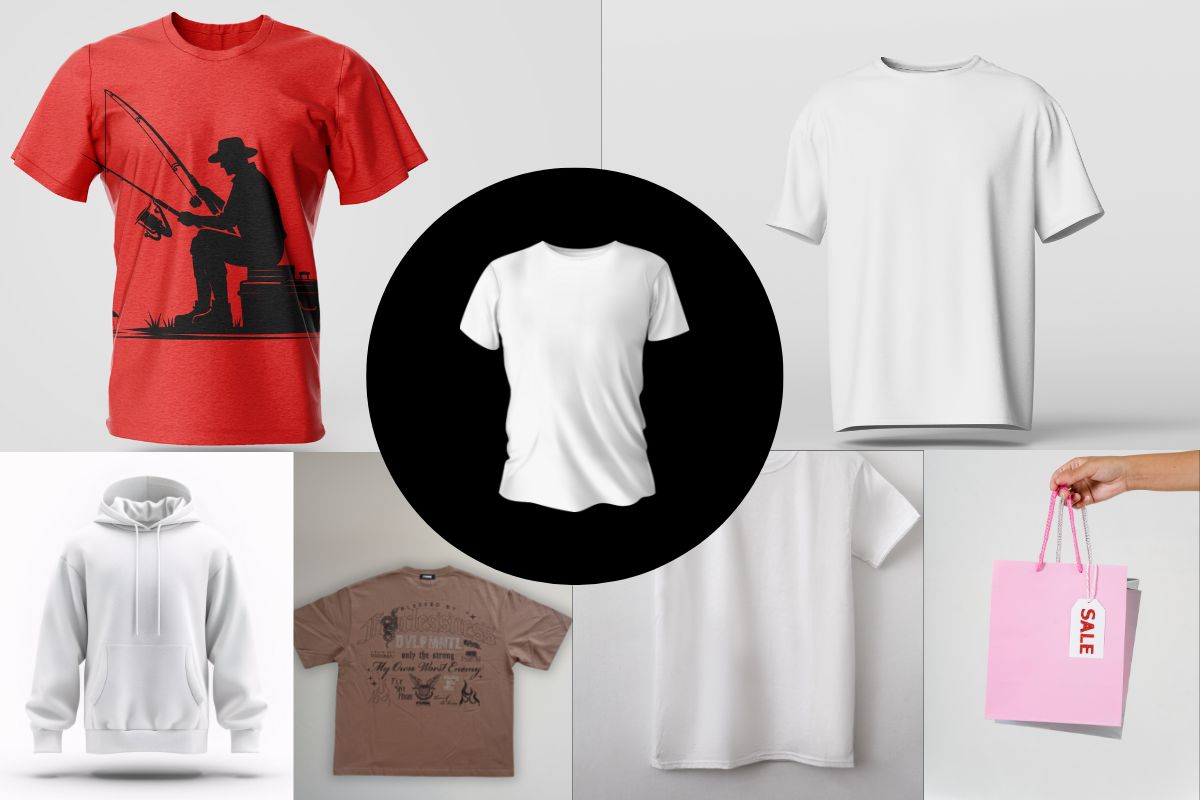
From Flat Photos to Ghost Mannequins: A Smarter Way to Launch Apparel Online
Ansu Man | Feb. 11, 2026 | Categories: Retouching | 0 comments
Launching an apparel brand in today’s e-commerce environment no longer requires immediate access to professional studios, live models, or physical samples.
Many emerging Shopify-based businesses begin with a focused product line, digital artwork, and standardized blank garments, but lack the infrastructure for traditional product photography.
In such cases, professional photo retouching and digital apparel visualization offer a practical, scalable alternative.
The Reality Facing New Apparel Brands
Early-stage apparel businesses often operate under significant constraints, including:
- Limited production volumes
- No access to in-house photography
- Reliance on flat garment images provided by manufacturers
- Tight timelines for launching and testing products online
At the same time, online shoppers expect clean, professional, and consistent product visuals that clearly communicate fit, design, and quality. Meeting these expectations is challenging without a structured image production workflow.
Why Flat Garment Photos Are Not Enough
Flat-lay images are useful for internal reference but are rarely effective as primary product images on e-commerce platforms. They typically fail to convey:
- Garment structure and drape
- Visual depth and realism
- Brand credibility in competitive marketplaces
As a result, many apparel brands turn to ghost mannequin, style imagery, which presents clothing in a dimensional, wearable form without using models.
Digital Ghost Mannequin Solutions Without Photoshoots
Through professional photo retouching, flat garment photos can be transformed into realistic ghost mannequin visuals entirely through digital processes. This approach combines technical expertise with garment-specific knowledge to create images suitable for commercial use.
A typical workflow includes:
- Digitally reshaping garments to simulate natural wear
- Placing client artwork onto fabric with accurate perspective
- Preserving seams, folds, and fabric texture
- Applying subtle shadows and highlights for depth
- Delivering clean, background-ready images for Shopify and other platforms
For commonly used blanks, such as standard t-shirts, hoodies, and tank tops, experienced retouching teams can achieve high accuracy and visual consistency across product lines.
Advantages for Shopify and Print-On-Demand Sellers
Digital ghost mannequin services provide several strategic benefits for apparel sellers:
- Faster product launches without waiting for physical samples
- Consistent imagery across SKUs and collections
- Lower upfront costs compared to traditional photography
- Flexibility to update or test new designs efficiently
This makes digital retouching particularly valuable for niche brands, limited-run collections, and print-on-demand businesses.
Built to Scale With Your Business
What begins as a launch solution often evolves into a long-term image production strategy. As sales volume increases, the same digital workflow can support:
- New designs on existing garments
- Seasonal updates
- Marketplace-specific image requirements
- High-volume SKU expansion
Professional retouching ensures consistency, accuracy, and reliability at every stage of growth.
How Small Apparel Brands Use Digital Retouching to Look Big on E-Commerce Platforms?
Professional ghost mannequin retouching allows apparel brands to present their products with confidence, even before photography becomes feasible.
By combining technical precision, garment knowledge, and ethical transparency, digital image production provides a reliable foundation for launching and scaling modern apparel businesses.
Ethical Transparency in Digitally Generated Apparel Images
A common concern surrounding digitally created product imagery is whether it accurately represents the product being sold.
Ethical image production is essential for long-term brand trust. Professional photo retouching companies address this by:
- Using actual garment references or manufacturer-provided flats
- Avoiding unrealistic alterations to fit, proportions, or fabric behavior
- Clearly reflecting design placement, color, and construction
- Ensuring imagery supports, rather than misleads, customer expectations
When executed responsibly, digital apparel visualization is not a substitute for the product itself, but a faithful visual representation designed to communicate design intent and garment structure, especially during early-stage launches.