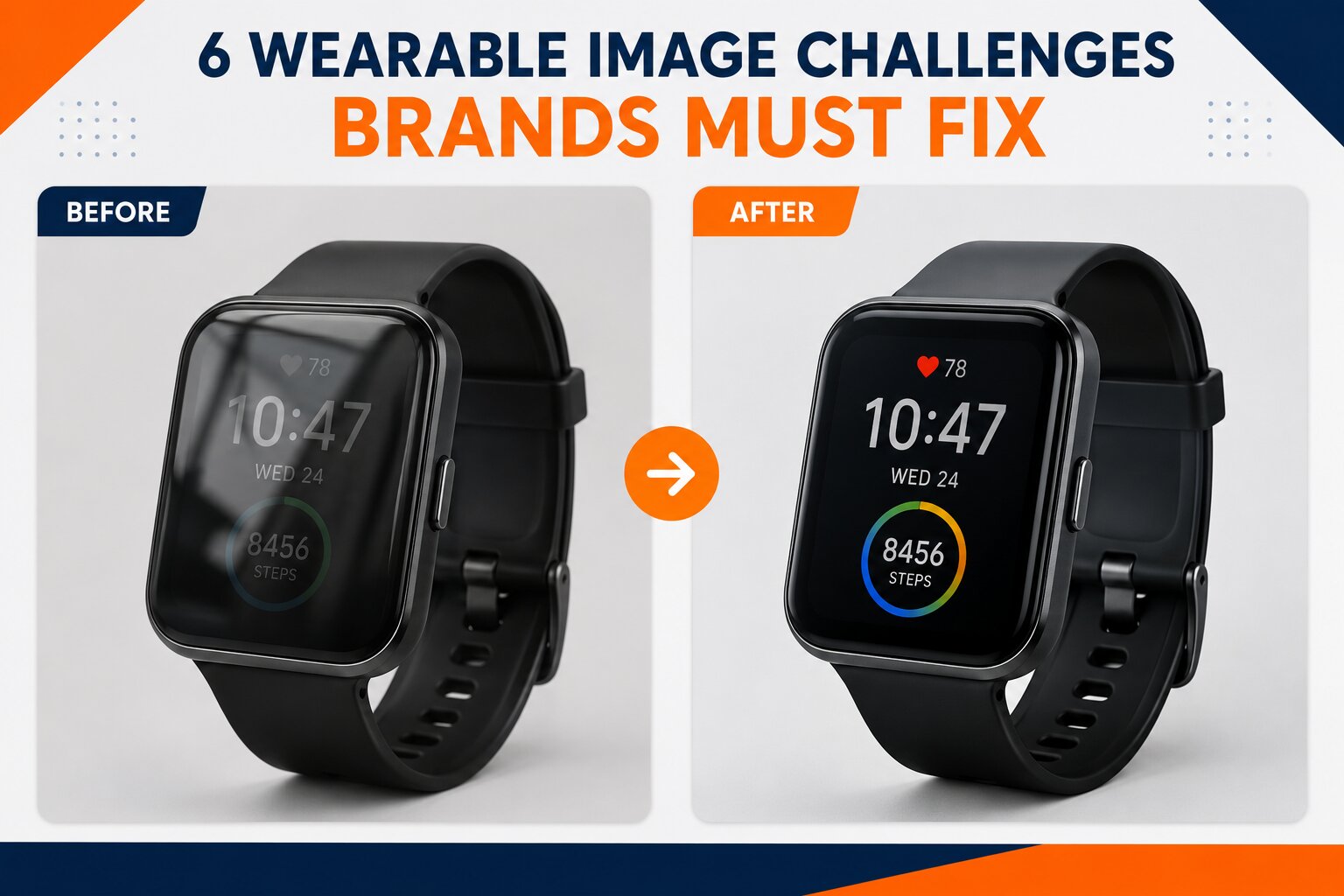
6 Wearable Image Challenges Brands Must Fix
Ansu Man | June 24, 2026 | Categories: E-commerce | 0 comments
Wearable technology has moved beyond simple electronic devices into a highly competitive lifestyle category. Smartwatches, fitness trackers, smart rings, hearables, head-mounted devices (HMDs), smart clothing, and medical wearables combine advanced engineering with consumer-focused design.
Buyers evaluate not only functionality but also aesthetics, comfort, material quality, and technical sophistication before making a purchase.
The Technical Visual Challenge in Wearable E-commerce
Wearable product photography presents complex visual challenges. Unlike conventional products, wearables contain reflective screens, metallic finishes, miniature components, sensors, textured materials, and intricate construction details. Poorly optimized images can hide these features, making technologically advanced products appear ordinary.
Professional photo editing helps brands overcome these challenges by improving technical visibility, refining product details, and creating accurate visuals that communicate innovation and quality.
1. Managing Screen Reflections and Display Clarity
Smartwatches, fitness trackers, and HMDs often feature glass displays that create strong reflections during photography. Studio lights, cameras, and surrounding objects can appear on the screen surface, reducing visibility of interfaces and design details.
Advanced retouching techniques remove distracting reflections while preserving realistic screen depth and brightness. This allows product interfaces, icons, and display features to remain clearly visible without making the image look artificial.
2. Enhancing Metallic Finishes and Premium Materials
Smart rings, premium watches, and wearable accessories often use stainless steel, titanium, ceramic, aluminum, or polished alloys. These materials depend heavily on controlled highlights and accurate reflections to communicate quality.
Professional retouching balances highlights, improves edge definition, and refines surface texture. The process enhances the premium appearance of metals while maintaining the original characteristics of the product.
3. Improving Micro-Details of Sensors and Components
Modern wearables contain small but important functional elements such as heart-rate sensors, charging contacts, buttons, ports, microphones, and speaker openings. These details influence customer perception of technology and build quality.
High-resolution retouching improves sharpness, contrast, and visibility of these components. This helps customers understand product engineering and functionality through online images.
4. Maintaining Accurate Material and Color Representation
Wearables are available in multiple finishes, including matte coatings, silicone straps, woven bands, leather accessories, and translucent materials. Capturing accurate colors and textures can be difficult because different surfaces react differently to lighting.
Professional color correction ensures consistency across product variants. Material textures are enhanced without changing the actual appearance, allowing customers to make confident purchasing decisions.
5. Refining Smart Clothing and Flexible Materials
Smart clothing combines electronic components with fabrics designed for comfort, movement, and performance. Examples include sensor-enabled garments, posture monitoring apparel, and connected fitness clothing.
These products require careful retouching because fabric texture, stitching, embedded components, and garment structure must remain visible. Professional editing enhances textile details while preserving natural folds and flexibility.
6. Presenting Medical Wearables with Precision
Medical wearables require a balance between technical accuracy and user-friendly presentation. Devices such as monitoring patches, health trackers, and diagnostic wearables must communicate reliability, comfort, and usability.
Retouching improves clarity, removes distracting imperfections, and highlights important design elements. The final images create a professional appearance while maintaining realistic product representation.
Transform Wearable Images into Technical Sales Assets
In wearable technology, product images must communicate more than appearance. They need to demonstrate innovation, precision engineering, material quality, and user experience. When reflections hide displays or details appear unclear, customers may not fully understand the value of the product.
Professional photo retouching bridges the gap between technical product design and customer perception. By refining reflections, enhancing materials, improving component visibility, and maintaining accurate colors, PicsRetouch photo retouching helps wearable brands create stronger e-commerce presentations.
Ready to Improve Your Wearable Product Images?
If your smartwatches, fitness trackers, smart rings, hearables, or connected devices are not visually communicating their technical advantages, professional retouching can enhance their presentation. PicsRetouch photo retouching helps showcase innovation with accuracy and premium visual quality.
Contact us today to create technically refined wearable product images that strengthen your e-commerce presence and improve customer confidence.